

Abstract
Metal roofing, cladding, and structural steel assemblies demand fasteners that drill, tap, and seal in a single operation. This guide explores the engineering behind the Hex Washer Self Drilling Screw With EPDM Washer, covering materials, coatings, drill point selection, installation torque, and the sealing science that prevents water ingress in the most demanding environments. Whether specifying for industrial roofing or precision sheet metal fabrication, the technical depth here provides actionable guidance for professionals.
Table of Contents
- Anatomy of the Fastener: Head, Thread, Point, and Washer
- The Sealing Science Behind EPDM Washers
- Materials and Coatings: Matching Fasteners to Environments
- Drill Point Selection and Material Thickness
- Installation Best Practices: Speed, Torque, and Technique
- Real-World Applications Across Construction and Industry
- Self-Drilling vs. Self-Tapping: What Specifiers Need to Know
- Standards, Testing, and Compliance
- Frequently Asked Questions
- Get Expert Guidance
Anatomy of the Fastener: Head, Thread, Point, and Washer
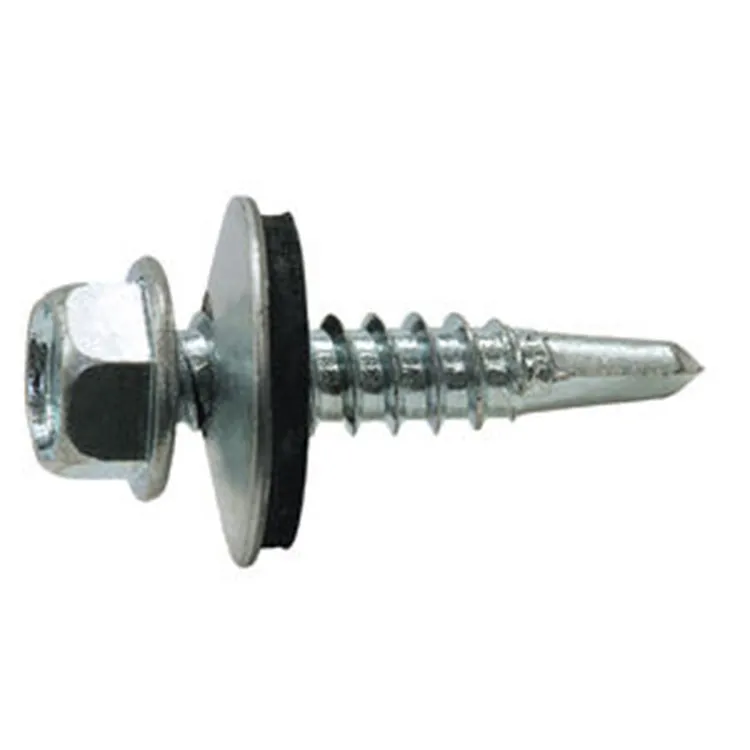
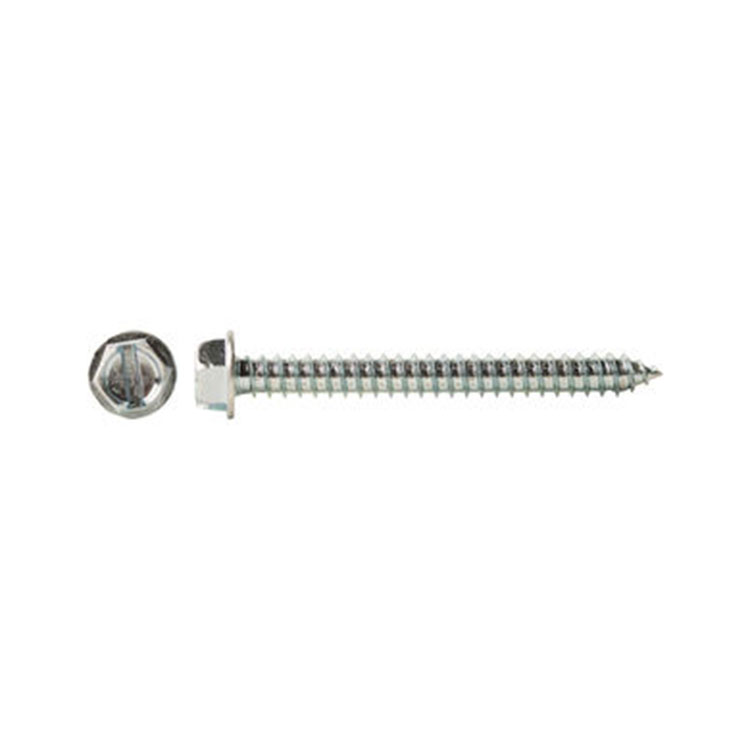
Understanding how each component of a hex washer self-drilling screw contributes to overall performance is essential for making informed specification decisions. Every element — from the hexagonal head geometry to the thread pitch and the bonded EPDM washer — plays a distinct role in load distribution, sealing integrity, and installation efficiency.
Hex Washer Head Design
The hexagonal washer head serves two critical functions simultaneously. First, the six-sided geometry allows installation with standard magnetic nut setters or hex sockets, enabling high-torque application without cam-out. Second, the integrated flange or washer seat distributes clamping force across a wider surface area than a plain hex head, reducing the risk of dimpling thin-gauge metal panels during tightening.
For roofing and cladding applications where panel deformation must be minimised, this wider bearing surface is not merely a convenience — it directly affects the long-term weathertightness of the assembly. A concentrated point load can deform the panel around the fastener, creating a low spot where water pools and eventually penetrates.
Thread Geometry and Pitch
Self-drilling screws for metal-to-metal fastening typically feature a fine or medium thread pitch optimised for steel substrates. The thread must accomplish three things: cut into the drilled hole, generate sufficient pull-down force to compress the EPDM washer, and maintain clamping load over years of thermal cycling. Threads that are too coarse may strip in thin steel; threads that are too fine may not generate adequate clamping force before the washer seats.
The Self-Drilling Point
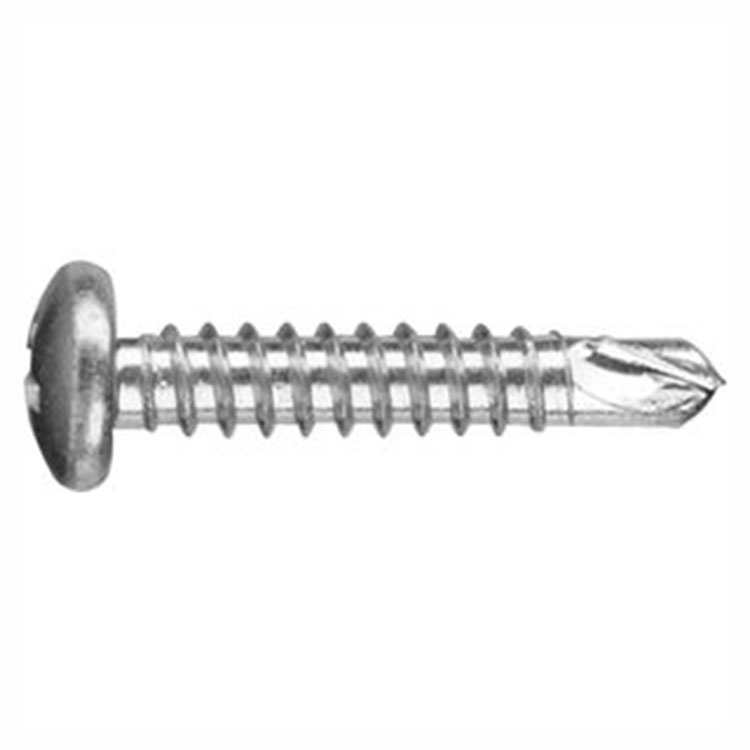
The drill-shaped point eliminates the need for a separate pilot hole, combining drilling and fastening into one operation. Point styles are classified numerically — from #1 (thin sheet) through #5 (heavy-duty steel up to 12.7 mm). The drill flute height determines the maximum material thickness the screw can penetrate, while the unthreaded pilot section must be long enough to completely pierce the material before the threads engage.
The Sealing Science Behind EPDM Washers
Water ingress is the single greatest threat to metal roofing systems. A fastener that drills perfectly but fails to seal allows moisture to migrate into the building envelope, leading to corrosion, insulation degradation, and structural damage over time. The EPDM (ethylene propylene diene monomer) washer is the component that stands between a well-installed roof and a leak-prone liability.
Why EPDM?
EPDM is a synthetic rubber with an outstanding resistance profile for outdoor exposure. It withstands UV radiation without significant degradation, remains flexible across a wide temperature range (typically -40°C to +120°C), and resists ozone cracking, which is a common failure mode for cheaper neoprene alternatives.These properties ensure the washer maintains its sealing function through years of sun exposure, freeze-thaw cycling, and atmospheric exposure.
Bonded vs. Loose Washers
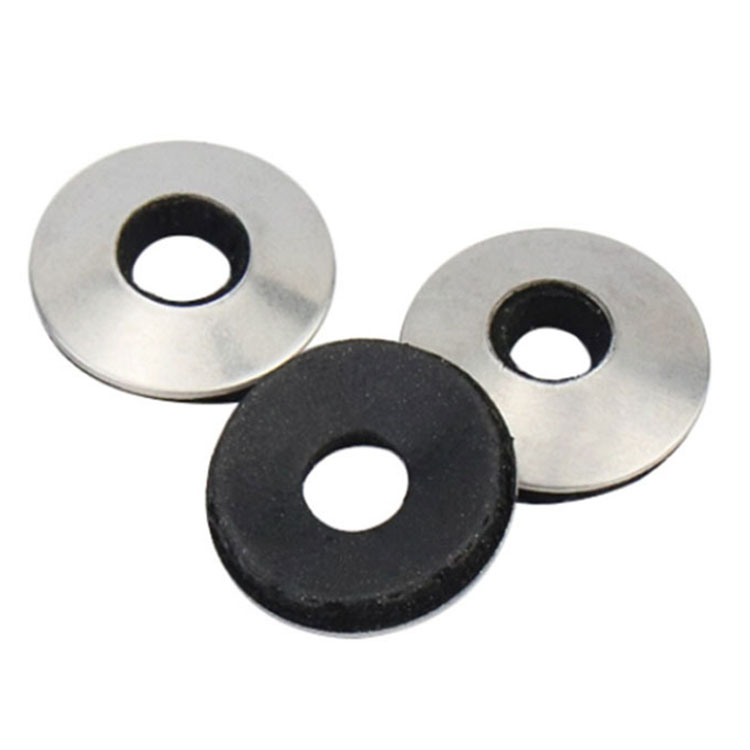
EPDM washers are available in two configurations: bonded (vulcanised directly to the metal backing washer) and loose. Bonded washers are strongly preferred for roofing applications because they cannot be dislodged during handling or installation, and the chemical bond ensures a uniform seal around the screw shank. Loose washers introduce an additional failure point — if the washer shifts off-centre during driving, the seal becomes asymmetric and prone to leakage.
How the Seal Forms
When the screw is driven, the EPDM washer compresses between the metal washer backing and the panel surface. The elastomer deforms to fill minor surface irregularities, micro-scratches, and panel profile variations. The key is achieving the correct compression — enough to create a watertight barrier, but not so much that the elastomer is crushed beyond its elastic limit. Installation tools with depth stops or torque control are recommended for consistent results.
| Washer Property | Specification Range | Impact on Performance |
|---|---|---|
| Elastomer type | EPDM (peroxide-cured) | UV and ozone resistance for 20+ years |
| Metal backing gauge | 20-gauge steel | Even load distribution under compression |
| Compression set | <25% after 24h at 70°C | Maintains sealing force after thermal cycling |
| Temperature range | -40°C to +120°C | Flexibility in extreme climates |
| Washer outer diameter | 14 mm to 29 mm | Larger diameter for primary roof fixings |
Materials and Coatings: Matching Fasteners to Environments
The base material and surface treatment of a hex washer self-drilling screw determine its corrosion resistance, load capacity, and service life. Selecting the wrong combination for a given environment leads to premature fastener failure and potentially costly remediation.
Carbon Steel with Protective Coatings
Case-hardened carbon steel (typically C1018, C1022, or AISI 4037) remains the most common substrate for self-drilling screws because it offers an optimal balance of drill-point hardness and thread ductility. The hardened surface enables the drill point to cut through steel, while the softer core absorbs installation torque without fracturing.
- Zinc plating: Standard protection for indoor and mildly exposed applications; provides barrier corrosion resistance.
- Zinc-aluminium flake coatings: Superior sacrificial protection; suitable for outdoor exposure and industrial atmospheres.
- Ruspert coating: A multi-layer ceramic-modified coating that delivers corrosion resistance exceeding 1,000 hours in salt spray testing, making it appropriate for marine and severe industrial environments.
- Coloured polyester (RAL) coatings: Provide additional corrosion protection while matching the fastener colour to roofing or facade cladding for aesthetic consistency.
Stainless Steel Options
For highly corrosive environments — coastal installations, chemical plants, or food processing facilities — stainless steel screws are the preferred choice. Grades 304 and 305 offer excellent corrosion resistance but lower hardness than carbon steel, which limits their drilling capacity. Grade 410 stainless provides better hardness at the expense of somewhat reduced corrosion resistance, while bi-metal construction (stainless head and shank welded to a hardened carbon steel drill tip) delivers the best of both properties: corrosion resistance in the exposed portions and drilling power at the point.
| Environment | Recommended Base Material | Recommended Coating | Salt Spray Rating |
|---|---|---|---|
| Indoor / dry interior | Carbon steel | Zinc plated | 72 hours |
| Outdoor / low pollution | Carbon steel | Zinc-aluminium flake | 240 hours |
| Industrial / moderate | Carbon steel | Ruspert | 1,000 hours |
| Marine / coastal | Bi-metal (SS + CS) | Ruspert on carbon section | 1,500 hours |
| Severe marine | Stainless 316 | Passivated | N/A (inherent) |
Drill Point Selection and Material Thickness
One of the most frequent specification errors in metal fastening involves mismatching the drill point size to the total material thickness. A point that is too short will fail to penetrate the full stack before thread engagement begins — a condition that leads to binding, screw breakage, or incomplete fastening. Conversely, an oversized point wastes drilling efficiency and can enlarge the hole beyond the thread’s gripping capacity.
The three variables that must be evaluated together are drill flute height, point length (pilot section), and total material thickness. The pilot section must completely pierce all layers of material before the first thread engages. Because threads advance faster than the drilling action, premature thread engagement causes the screw to bind and potentially shear at the shank.
| Point Type | Screw Sizes | Material Thickness Range (Steel) | Typical Application |
|---|---|---|---|
| #1 | #6 – #8 | 0.8 mm – 1.6 mm | Light-gauge sheet metal |
| #2 | #6 – #10 | 0.9 mm – 2.8 mm | General sheet-to-sheet |
| #3 | #8 – #14 | 2.8 mm – 5.3 mm | Roofing panels to purlins |
| #4 | #12 – 1/4" | 4.8 mm – 6.4 mm | Heavy-duty structural steel |
| #5 | #12 – 1/4" | 6.4 mm – 12.7 mm | Thick steel connections |
When fastening thick materials to metal — such as wood purlins to steel frames — screws with winged reamers are used. The wings enlarge the hole in the upper material so the threads pass through without binding, then break away upon contact with the steel substrate, allowing the threads to engage in the metal.
Installation Best Practices: Speed, Torque, and Technique
Correct installation technique is as important as correct fastener selection. Even a premium-grade hex washer self-drilling screw will fail prematurely if driven at the wrong speed, with excessive torque, or at an improper angle.
Drive Speed
The optimal rotational speed for self-drilling screws depends on screw diameter, drill point type, and substrate hardness. As a general guideline, speeds between 1,200 and 2,000 RPM are recommended for metal-to-metal fastening.Exceeding the maximum recommended speed risks overheating the drill point, dulling the cutting edges, and potentially burning through protective coatings.
Torque Control
Over-tightening remains the leading cause of washer compression failure and screw breakage. The goal is to achieve a snug fit — where the EPDM washer is compressed sufficiently to create a seal but not crushed beyond its elastic recovery limit. The recommended installation pressure for screw guns is approximately 200–300 N, with an adjustable torque clutch or depth-sensing nose piece to prevent over-driving.
- Stripping: occurs in thin materials when threads are torn out of the substrate due to excessive torque.
- Torsional failure: the screw shank twists and breaks when tightening torque exceeds the fastener’s torsional strength — more common in thicker materials.
- Delayed failures: over-tightening stresses the fastener, initiating micro-cracks that allow corrosion to penetrate and cause failure months or years later.
Installation Angle and Tooling
Self-drilling screws must be driven perpendicular (90°) to the substrate. Any deviation causes the washer to seat unevenly, creating a crescent-shaped gap where water can enter. A magnetic driver or nut setter should always be used to maintain alignment and prevent the screw from walking during initial engagement. Where possible, a screw gun with a depth locator is preferred over an impact driver, as impact tools deliver high-torque pulses that can damage the drill point or strip threads.
Real-World Applications Across Construction and Industry
The combination of self-drilling capability and integrated EPDM sealing makes this fastener family indispensable across a broad range of construction and fabrication disciplines.
Metal Roofing and Cladding
This is the primary application domain. Metal roofing systems — from standing seam to corrugated profiles — rely on thousands of fasteners to secure panels to purlins, with each penetration point representing a potential leak path. The bonded EPDM washer creates a reliable watertight seal at every fixing point, while the hex washer head distributes wind uplift loads across the panel surface without causing deformation.
Structural Steel Framing
In cold-formed steel framing, self-drilling screws connect studs to tracks, sheathing to studs, and structural panels to frames. The self-drilling point eliminates the need for pre-drilling, accelerating installation while maintaining connection integrity. Load distribution through the hex washer head prevents point-load deformation of thin-gauge studs.
HVAC and Mechanical Systems
Ductwork, mechanical enclosures, and outdoor equipment housings benefit from the sealing properties of EPDM-washered screws. These applications often expose fasteners to condensation, rain, and temperature fluctuations, making the watertight seal essential for equipment longevity.
Solar Panel Mounting Systems
Solar installations combine metal racking, panel frames, and roof penetrations — all requiring weather-tight fastening. Self-drilling screws with EPDM washers provide the speed of installation demanded by large-scale solar farms while ensuring that every mounting point remains watertight for the 25-year design life of a typical photovoltaic system.
Self-Drilling vs. Self-Tapping: What Specifiers Need to Know
The terms “self-drilling” and “self-tapping” are frequently used interchangeably, but they describe fundamentally different fastener behaviours.
Self-tapping screws cut their own threads as they are driven into a pre-drilled pilot hole. They do not have a drill-shaped point and cannot penetrate solid metal without a pre-existing hole. Self-drilling screws, by contrast, feature a drill point that creates the hole and then the threads engage to tap into the metal — all in one continuous operation. Every self-drilling screw is technically self-tapping, but not every self-tapping screw is self-drilling.
For metal-to-metal fastening in construction, the self-drilling variant is almost always the correct choice. It eliminates the separate drilling step, reduces labour, and removes the risk of drilling a pilot hole at the wrong diameter — a common source of connection failure in thin-gauge steel assemblies.
Standards, Testing, and Compliance
Specifying fasteners that comply with recognised industry standards ensures dimensional consistency, mechanical performance, and corrosion resistance across production lots.
In North America, self-drilling screws are manufactured to SAE J78 for dimensional and performance requirements, and ASME B18.6.3 for head and drive dimensions. For cold-formed steel framing connections, ASTM C 1513 governs the mechanical properties, while ASTM F1941 covers corrosion-resistant coating performance. Material standards include ASTM A 510 for carbon steel and ASTM B 117 for salt spray corrosion testing.
In European markets, DIN 7504 specifies the dimensions, requirements, and testing methods for self-drilling tapping screws, while national and project-specific specifications may impose additional performance criteria. The ISO 9001 quality management framework provides assurance that manufacturing processes are controlled and traceable.
Frequently Asked Questions
Screw breakage during installation usually stems from one of three causes: excessive drive speed, too much downward pressure, or a drill point that is too short for the material thickness. The pilot section must fully penetrate the material before the threads engage. If threads engage prematurely, the screw binds and the shank shears. Reduce drive speed, apply lighter pressure, and verify that the point length is appropriate for the total material thickness.
The EPDM washer should be visibly compressed — typically to about 50–60% of its original thickness — but not crushed flat. You should see a slight bulge of the rubber around the perimeter of the metal washer backing. If the rubber appears flattened or is extruding far beyond the washer edge, you have over-tightened. A screw gun with a depth-sensitive nose piece or adjustable torque clutch provides the most consistent results.
Yes, but only with a screw that features winged reamers on the shank. The wings enlarge the hole in the wood so the threads pass through without gripping, then break off when they contact the metal substrate. This allows the threads to engage the steel and pull the assembly tight. Without wings, the threads will bite into the wood and prevent proper seating against the metal.
A bonded washer has the EPDM rubber vulcanised directly onto the metal backing washer during manufacturing. This creates a permanent chemical bond that cannot be separated during handling or installation. A loose washer sits between the screw head and the panel independently. Bonded washers are preferred for roofing because they maintain concentric alignment with the screw shank, ensuring a uniform seal. Loose washers can shift off-centre, compromising the seal.
Choose carbon steel with an appropriate coating for indoor, low-pollution, and moderate outdoor environments. For coastal installations, chemical processing facilities, or any location with high chloride exposure, specify stainless steel or bi-metal screws. The base material choice should be driven by the atmospheric corrosivity category of the installation site and the expected service life of the structure.
Work With a Trusted Fastening Partner
Need Help Selecting the Right Fastener?
Every roofing and cladding project has unique demands — substrate thickness, environmental exposure, panel profile, and load requirements. JOIN-fasteners® brings deep technical expertise to every specification challenge.