Nylon insert locknuts are one of the most widely used fastening solutions for preventing bolt loosening under vibration, shock, or dynamic loads. They offer a simple, reliable, and cost‑effective alternative to more complex locking methods like adhesives, deformed threads, or castle nuts with cotter pins.
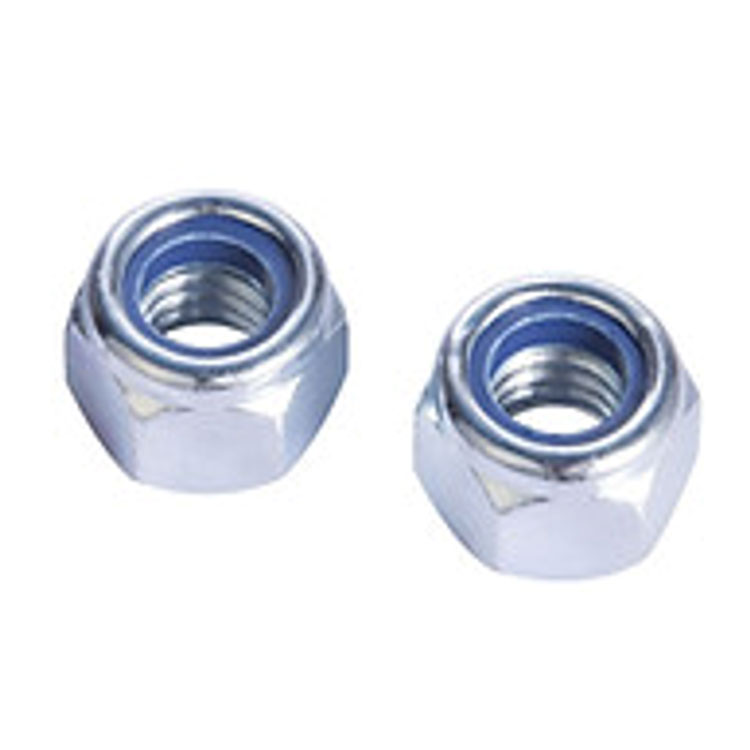
The design is straightforward but highly effective:
A ring of high‑grade nylon (typically Nylon 6/6) is permanently inserted at the top or middle of the nut's thread bore.
The inner diameter of this nylon ring is slightly smaller than the major diameter of the mating bolt thread.
When you thread the bolt in, the bolt's threads cut into and compress the nylon ring, creating a tight interference fit.
This interference generates continuous radial pressure against the bolt threads, which produces a consistent frictional resistance that opposes rotational loosening.
Unlike mechanical locking devices (e.g., tab washers or wire ties), this system does not rely on external components — the locking action is built into the nut itself.
Nylon insert locknuts perform exceptionally well in high‑vibration environments. Industry data consistently rate them as suitable for severe vibration conditions, making them a go‑to choice for automotive, industrial machinery, and outdoor equipment.
This is the single most critical factor when selecting these nuts:
| Condition | Temperature Range |
|---|---|
| Continuous operation | –50°C to +100°C |
| Short‑term / intermittent exposure | Up to +250°C (depending on nylon grade) |
Above +100°C, the nylon softens and loses its locking torque.
Below –50°C, the nylon becomes brittle and may crack during installation or under impact.
Practical tip: If your application sees sustained temperatures above 100°C, consider all‑metal locknuts or high‑temp nylon variants (consult your supplier).
The nylon ring deforms plastically on the first installation — that first torque is the highest.
| Number of uses | Typical residual locking torque |
|---|---|
| 1st install | 100% (baseline) |
| 2nd–3rd reuse | ~70–85% |
| 5+ reuses | Not recommended for critical joints |
In safety‑critical applications (e.g., brake systems, suspension, lifting equipment), always install a new nut.
You can install them with standard hand wrenches, sockets, or power tools. However:
Recommended max speed: 150 RPM when using pneumatic or electric drivers. Higher speeds generate friction heat that can damage the nylon insert before full seating.
| Material | Best‑for environment | Common grades |
|---|---|---|
| Carbon steel (zinc‑plated) | General indoor / dry conditions | Grade 8, 10B21 |
| Carbon steel (black oxide) | Light oil‑resistant, aesthetic finish | Grade 8 |
| Stainless steel 304 (A2) | Moisture, washdown, mild chemicals | A2‑70 |
| Stainless steel 316 (A4) | Marine, salt spray, aggressive chemicals | A4‑80 |
Zinc plating with trivalent passivation is the most common cost‑effective finish for industrial use. For outdoor coastal or offshore environments, A4‑316 stainless is strongly recommended.
The most recognized global standard for nylon insert locknuts is:
| Standard | Description |
|---|---|
| DIN 985 | Hexagon nuts with non‑metallic insert — thin type |
| DIN 982 | Hexagon nuts with non‑metallic insert — thick / full‑height type |
| ISO 7040 | Prevailing torque nuts — non‑metallic insert (metric, coarse) |
| ISO 10511 | Prevailing torque nuts — non‑metallic insert (metric, fine) |
For inch‑based systems, ANSI/ASME B18.16.6 covers nylon insert locknuts in UNC/UNF threads.
Tip: Always verify the prevailing torque values per the relevant standard to ensure compliance with your design requirement.
Inspect the nylon ring before installation — it should be free of cracks, chips, or oil contamination.
Hand‑start the nut to avoid cross‑threading, which is more likely due to the interference fit.
When using power tools, set the clutch to prevent over‑torquing — the prevailing torque adds to the final seating torque, so your tool setting should account for this.
Use a lubricant on the bolt threads (if permitted) — this can reduce galling, especially with stainless steel, but be aware that lubrication may slightly reduce the effective locking torque.
If the nut feels abnormally loose during the first few threads, the nylon ring may be worn or defective — discard it.
| Industry / Sector | Example uses |
|---|---|
| Automotive | Engine mounts, exhaust brackets, suspension linkages, driveline components |
| Industrial machinery | Motor bases, pump flanges, gearbox covers, conveyor systems |
| Construction equipment | Excavator pivot points, crane connections, structural steel bolting |
| Agricultural machinery | Tractor attachments, harvester blades, tiller assemblies |
| General manufacturing | Appliance assemblies, furniture, electrical enclosures, HVAC units |
| DIY / hobby | Bicycles, mower decks, trailer hitches, home workshop jigs |
| Method | Vibration resistance | Reusable | Temp range | Cost |
|---|---|---|---|---|
| Nylon insert nut | Excellent | Limited | –50 to +100°C | Low–Moderate |
| All‑metal deformed nut | Excellent | 1–3 times | –200 to +600°C | Moderate |
| Chemical threadlocker (e.g., Loctite) | Good | No (reapply) | –50 to +150°C | Low (per use) |
| Castle nut + cotter pin | Good | Yes | Unlimited | Low |
| Spring washer | Poor | Yes | Unlimited | Very low |
Choose them when:
Your assembly experiences moderate to severe vibration.
For 80% of general industrial and automotive applications, a zinc‑plated carbon steel nylon insert locknut to DIN 985 offers the best balance of performance, cost, and availability.
Always check:
Thread size and pitch (metric vs. inch)
Property class (e.g., 8, 10, or stainless)
Temperature profile of your operating environment
Whether you need thin (DIN 985) or full‑height (DIN 982) version for your clamping length
Use them correctly, and they will give you trouble‑free, maintenance‑reduced connections for years.