That trade‑off is disappearing. Thread cutting screws have moved from a niche solution to a first‑line defense against vibration‑induced failure. And the reason is simple: they cut their own perfectly matched internal thread without creating harmful residual stress, then lock in place with consistent prevailing torque.
Unlike thread forming screws, which displace material (and can crack thin or brittle substrates), thread cutting screws remove material. The result is a clean, low‑stress thread form that fits the screw like a precision nut.
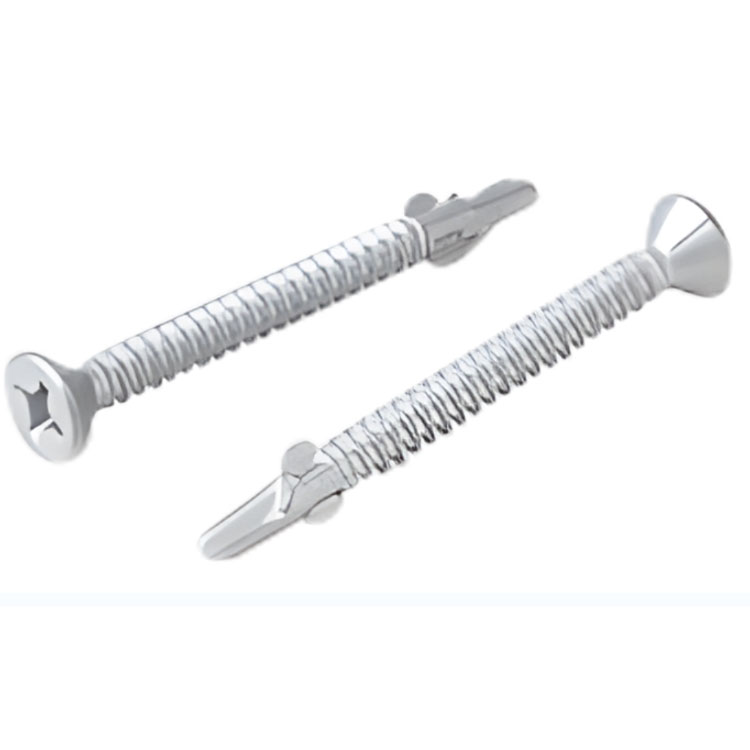
The most common variant for high‑vibration applications is the Type F point — a blunt, fluted tip that cuts a machine screw quality thread in thicker metal, castings, or even stacked materials. Once fully seated, the screw doesn't just rely on clamp load. The interference fit between the cut threads and the screw flanks provides inherent resistance to back‑out.
Modern manufacturing trends are working against traditional fasteners:
Lightweighting means thinner materials and more plastics, where thread forming risks cracking.
Higher engine and drivetrain frequencies mean faster, smaller vibrations that shake standard lock washers loose.
Fewer service points mean a screw that loosens is a warranty claim, not a simple retorque.
Thread cutting screws address all three. They install with lower driving torque than thread formers (less risk of stripping), but maintain higher removal torque — precisely what you need to survive road, rail, or industrial vibration cycles.
Nowhere is this more visible than in floorboard fastening. Vehicle floors see it all: temperature swings, moisture, constant flexing, and non‑stop vibration.
A thread cutting screw designed for floorboards must:
Cut cleanly through painted or coated holes without chipping finish
Reach full engagement in blind or through‑holes without bottoming out
Hold torque after thousands of vibration cycles
Resist galvanic corrosion in mixed‑metal assemblies (steel to aluminum, steel to coated steel)
This is where the "gold standard" claim gets tested — and proven.
One manufacturer that has built its reputation on this exact application is JOIN-fasteners®. Their floorboard thread cutting screw line is engineered specifically for automated assembly lines and high‑stress environments.
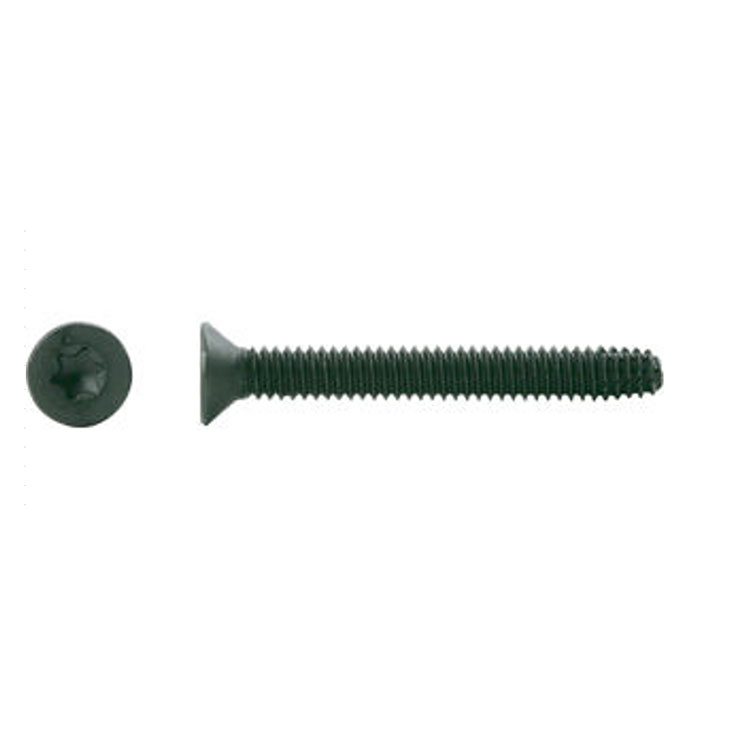
Take their Type F, Flat Head, Six‑Lobe (T30) drive screw as an example:
Material & Mechanical: SAE J933 — a certified standard for case hardened steel fasteners
Finish: Black Phosphate, Grade D of ASTM F1137/F1137M — provides excellent corrosion resistance while maintaining consistent friction (critical for torque control)
Case Hardened — hard surface for thread cutting, tough core for shear strength
Type F Point — designed for thicker materials (0.050″ to 0.250″ typical range)
The Six‑Lobe T30 drive is worth highlighting. Unlike Phillips or Hex, six‑lobe distributes driving torque evenly, eliminating cam‑out. In automated floorboard assembly, that means fewer stripped recesses and longer tool life.
The black phosphate coating serves two purposes: it prevents galling during thread cutting (common with plain zinc coatings), and it holds a thin film of oil or thread locker better than organic finishes — a hidden but valuable benefit for anti‑vibration performance.
Thread cutting screws aren't new. But for a long time, they were treated as a specialty item — something you spec'd only when a standard screw failed. That thinking has reversed.
Today, leading engineers in automotive, heavy truck, and industrial equipment start with thread cutting screws for any joint that sees vibration. The combination of low installation torque, high removal torque, and zero pre‑tapping makes them not just a better choice, but often the only choice.
And for applications like floorboards — where failure isn't an option — JOIN-fasteners® has quietly become a name to know.